CRYPTO MARKET UPDATE (DEC 16): BTC, ADA, LINK SEE MILD DECLINES AS MACRO PRESSURES WEIGH
Crypto prices moved lower today as risk appetite faded across global markets. Bitcoin and major altcoins traded cautiously, weighed down by rising liquidations and thin market liquidity.
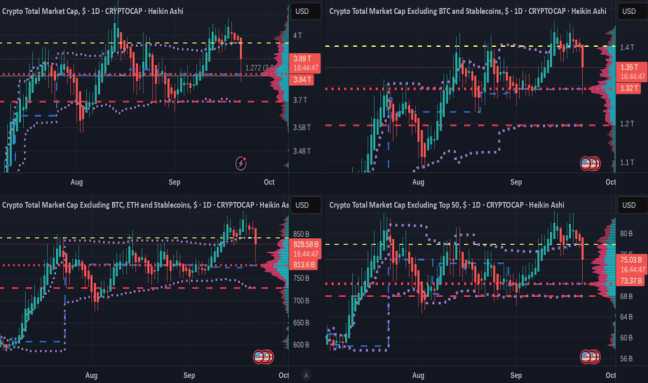
The total cryptocurrency market capitalization declined by about 1.1% to nearly $3.1 trillion. Bitcoin was hovering around $89,690 at the time of writing, down roughly 0.7% on the day. Among large-cap tokens, XRP slipped 0.8% to trade near $2, Cardano fell 1.2% to $0.4034, Chainlink edged down 0.6% to $13.69, while Hyperliquid dropped around 0.7% to $29.
Investor sentiment remained under pressure. The Crypto Fear & Greed Index fell by 5 points to 16, keeping the market mood firmly in the “extreme fear” zone. Data also pointed to an increase in forced position closures across the market.
BITCOIN FLAT AT $90K AS CERTAIN ALTCOINS RALLY, BUT BROAD ALTCOIN SEASON REMAINS DELAYED
According to figures from Coinglass, nearly $295 million in crypto positions were liquidated over the past 24 hours, with long positions accounting for the majority of losses. Despite the uncertain backdrop, trading activity stayed relatively strong, as total open interest in crypto derivatives rose 1.2% to approximately $135 billion.
Economic Uncertainty Weighs on Risk Appetite Across Markets
The recent pullback mirrors weakness in traditional financial markets. U.S. equities—particularly technology stocks—have come under renewed selling pressure, and digital assets have largely followed the same trend.
Uncertainty around Federal Reserve policy has added to the cautious mood. While the Fed recently delivered a 25-basis-point rate cut, hawkish commentary and mixed signals about future easing have encouraged investors to reduce risk exposure. With market liquidity typically thinner in mid-December, even relatively small sell orders have had a stronger-than-usual impact on prices.
Additional caution is coming from Japan, where investors are closely watching the Bank of Japan’s policy meeting scheduled for Dec. 18–19. Markets and economists broadly expect a 25-basis-point rate hike, which would lift the benchmark rate to 0.75%.
Such a move could strengthen the yen and trigger an unwinding of carry trades that often flow into risk-oriented assets, including cryptocurrencies. Historically, shifts in BOJ policy have coincided with periods of sharp volatility and price declines in Bitcoin.
Crypto Faces Near-Term Pressure as Key Support Levels Tested
Analysts caution that if Bitcoin fails to hold support in the mid-$80,000 range, selling pressure could intensify—especially in a low-liquidity environment where leverage is being reduced. A clear break below this level may trigger additional forced liquidations, potentially pulling Bitcoin down toward the $75,000 to $80,000 zone.
COMPANY GROWS BITCOIN STASH DESPITE ONGOING STOCK DECLINES
CryptoQuant CEO Ki Young Ju described the current market environment as neutral but uncertain, suggesting that holding existing positions could be a sensible strategy until a clearer trend emerges. He added that the recent price softness does not appear to be driven by excessive leverage in the market.
Meanwhile, on-chain data indicates that large Ethereum holders continue to accumulate. LD Capital founder Jack Yi noted that this behavior points to long-term investors increasing their spot exposure rather than selling during the recent downturn.
Conclusion
Overall, the crypto market remains under pressure as broader macroeconomic uncertainty continues to dampen risk appetite. Weak sentiment, thin liquidity, and rising liquidations have kept Bitcoin and major altcoins trading cautiously, with prices vulnerable to further volatility in the near term.
While analysts warn that a loss of key support levels could trigger additional downside, there are also signs of underlying resilience. Long-term investors, particularly in Ethereum, appear to be accumulating, and recent price weakness has not been driven by excessive leverage. Until clearer signals emerge from global markets and central bank policy decisions, traders are likely to remain cautious, with short-term price action closely tied to developments in traditional financial markets.