RISING BITCOIN VOLATILITY COMPARED TO VIX COULD SPARK PAIR TRADING MOVES
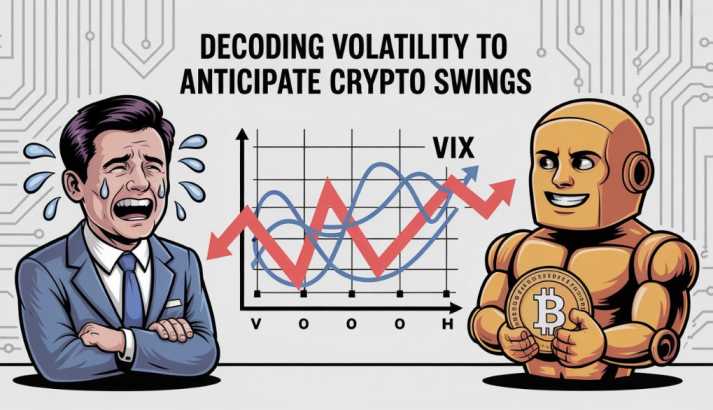
Pair traders seeking an edge in the markets may want to pay attention to a lesser-known gauge that links Bitcoin to the S&P 500. This indicator tracks the difference—or spread—between Volmex’s BVIV, which measures 30-day implied volatility for Bitcoin (BTC), and the VIX, the S&P 500 volatility index.
SOLANA STRUGGLES BUT KEEPS $143 SUPPORT AFTER SEVERAL WEEKS OF LOSSES
Understanding the BVIV-VIX Spread
The BVIV-VIX spread reflects how the crypto market’s expected volatility compares to equities. When the spread widens, it usually signals that traders anticipate higher price swings in Bitcoin than in the broader stock market.
“When the BVIV-VIX spread widens, it typically signals that markets expect higher volatility in crypto than in equities,” said Cole Kennelly, founder of Volmex. “Crypto options markets adjust more rapidly to liquidity and macro catalysts, so implied volatility often moves ahead of traditional markets.”
Implied volatility is influenced by the demand for options or hedging instruments, meaning that if traders expect bigger swings in BTC, the BVIV rises faster than the VIX.
Recent Breakout in the Spread
After months of trading in a range between 20.000 and 32.000, the BVIV-VIX spread has recently broken out of this zone, surpassing the downtrend from March 2024’s peak. This breakout suggests Bitcoin is expected to be more volatile than the S&P 500 in the near term.
Traders often interpret this as a signal for potential pair trading opportunities—taking opposing positions on volatility in BTC and equities rather than betting on price direction alone.
COINSHARES BACKS OUT OF $600M XRP AND SOL ETF COMPETITION
What does this mean for pair traders?
When the spread widens meaningfully, some traders view it as a relative value setup. Essentially, crypto implied volatility becomes “cheaper” or “richer” compared to equity volatility. Traders may then design multi-legged, cross-asset trades, rather than simple directional bets on BTC or the S&P 500.
“This type of view is typically expressed through multi-legged cross-asset volatility trades rather than a simple directional position,” explained Kennelly.
Risks and Considerations
Trading volatility is a capital-intensive strategy. It focuses on betting on price swings rather than the direction of an asset. Typically, traders use non-directional options or volatility futures to express these views.
It’s important to note that these strategies are high-risk and require:
- Constant monitoring of positions
- Significant capital allocation
- Institutional-level resources
For these reasons, such trades are usually best suited for professional or institutional traders, rather than retail investors.
Key Takeaway
The widening BVIV-VIX spread signals that Bitcoin volatility may outpace equity market risk in the coming days. Pair traders could explore cross-asset volatility strategies to capitalize on this divergence, but caution and sufficient resources are essential.
FAQs
Q: What is the BVIV-VIX spread?
A: The BVIV-VIX spread measures the difference between Bitcoin’s 30-day implied volatility (BVIV) and the S&P 500’s VIX. It shows how much more or less volatile traders expect Bitcoin to be compared to the stock market.
Q: What does a widening spread indicate?
A: A widening spread suggests that Bitcoin’s expected price swings are increasing faster than those in the equity market. It signals higher potential volatility in crypto compared to stocks.
Q: How can traders use this spread?
A: Traders can use the spread to identify relative value opportunities, often through pair trades that bet on volatility differences between Bitcoin and the S&P 500 rather than directional price movements.
Q: What type of trading does this involve?
A: This involves capital-intensive volatility trading, typically using multi-legged options or volatility futures. The goal is to profit from price swings rather than predicting whether the asset goes up or down.
Q: Who should consider these strategies?
A: Such strategies are usually suited for institutional or professional traders, as they require constant monitoring, significant capital, and risk management expertise. Retail traders are generally advised to avoid these high-risk trades.