TRUMP’S GROWING CRYPTO INVOLVEMENT COULD SLOW REGULATORY REFORM EFFORTS
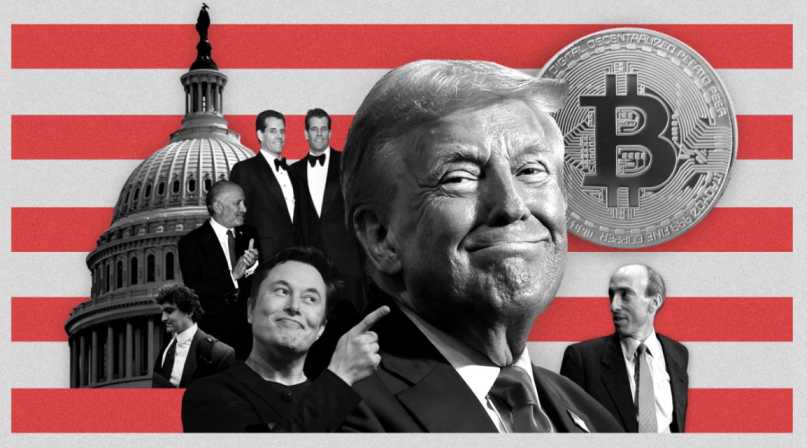
Trump crypto market structure reform: Washington’s long-awaited crypto regulatory framework is facing a familiar obstacle: politics. Efforts to pass a comprehensive market structure bill designed to bring clarity to U.S. crypto regulation are slowing as lawmakers clash over power dynamics, election timing, and President Donald Trump’s expanding crypto interests.
The Block, citing TD Cowen’s analysis, reported that Senate negotiations around the bill have stalled. Lawmakers may delay the legislation until 2027, with full implementation likely postponed to 2029.
Democrats have proposed a rule that would bar senior government officials and their immediate family members from owning or running cryptocurrency businesses while in office. Supporters say the measure will reduce conflicts of interest and strengthen public trust.
The restriction would directly affect President Trump and his family. They have reportedly generated more than $1 billion from crypto-related ventures since his inauguration on January 20, 2025.
These ventures include World Liberty Financial (WLFI), a decentralized finance and stablecoin project that lists Trump and his three sons as co-founders.
The Trump family is also reported to hold a stake in bitcoin miner American Bitcoin. They launched the Official Trump ($TRUMP) and MELANIA ($MELANIA) meme coins shortly before he took office.
TD Cowen policy analyst Jaret Seiberg said the president would reject the conflict-of-interest language unless lawmakers delayed its effective date. As a compromise, he suggested enforcing the restriction three years after the bill becomes law.
However, that approach comes with its own complications. Delaying the provision beyond the next presidential inauguration would mean it would not apply to Trump, a condition Democrats are unlikely to accept unless the rest of the bill is also delayed by the same timeframe.
As a result, market structure reform remains caught in a political stalemate, leaving the crypto industry without clear regulatory guidance while negotiations continue.
POLYGON PRICE SET FOR UPSIDE AS SHIFT4 INTRODUCES 24/7 STABLECOIN PAYMENTS
Democrats Have Little Incentive to Move Quickly
Republicans face a significant hurdle in the Senate, where 60 votes are required to overcome a filibuster. Even with full party unity, the GOP would still need support from at least seven to nine Democratic senators. This gives Democrats considerable leverage to slow negotiations or block the bill altogether.
Midterm Elections Shift the Political Calculus
With the 2026 midterm elections approaching, Democrats are widely expected to regain control of the House of Representatives.
Following the death of Rep. Doug LaMalfa (R-CA) on January 6, the Republican majority has narrowed to 218–213, further weakening the GOP’s position.
Democrats could also improve their standing in the Senate, strengthening their ability to influence or delay major legislation.
Delaying Could Reshape Regulatory Control
Rather than pushing for immediate passage, Democrats may prefer to wait and shape crypto regulation on more favorable terms later. If enactment slips to 2027, full implementation would likely not occur until 2029—after the next presidential inauguration.
BITCOIN OPTIONS EXPIRY NEARS AS BULLS TARGET UPSIDE WITH $23B AT STAKE ON DEC. 26
That timeline could allow Democratic-appointed regulators to shape and enforce the final rules if a Democrat wins the White House in 2028.
Timing Works in Democrats’ Favor
As TD Cowen policy analyst Jaret Seiberg noted, delaying the bill could ease political tensions surrounding it. “Time favors enactment, as the problems disappear if the bill passes in 2027 and takes effect in 2029,” Seiberg said.